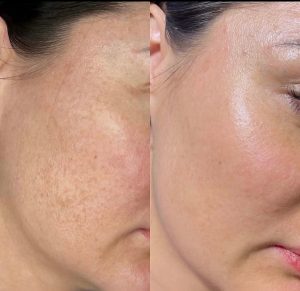
How to Protect Your Skin After Pigmentation Treatment: A Practical Sun Protection Guide
Pico laser treatment can break down stubborn pigment, but it can’t stop new pigment forming. Sunlight does that. If you’re investing in clinics offer, a sensible sun protection routine is what helps your results last. Here is a practical guide for melasma, sun spots, age spots, freckles and old sunburn marks.
Why Sun Protection Matters More Than Any Product
Pigment is produced by cells in the skin called melanocytes. When ultraviolet light reaches them, they make more melanin as a defence. In skin that is already prone to pigmentation, that response can be exaggerated, which is why spots darken in summer and melasma often flares with sun exposure.
Treatment clears existing pigment. Daily protection helps stop fresh pigment replacing it. Think of it as two halves of the same plan.
Choosing the Right Sunscreen
Labels can be confusing, so here is what to look for. The NHS advises choosing a sunscreen with an SPF of at least 30 to protect against UVB, and at least 4-star UVA protection. The SPF number tells you about UVB, the burning rays, while the star rating (or the letters “UVA” in a circle) tells you about UVA, the rays that penetrate deeper. Look for “broad spectrum” on the label, and check that the product hasn’t passed its expiry date. www
For pigmentation-prone skin, many people find a daily facial sunscreen they actually enjoy wearing is the most effective one, because it gets used. Some dermatologists also suggest tinted sunscreens containing iron oxides for melasma, because visible light may also play a part. It’s worth asking at your consultation what suits your skin.
How Much to Apply, and When
Most people apply too little. The NHS notes that most people do not apply enough sunscreen, and suggests applying it around 30 minutes before going out. For the face, a generous amount is better than a thin film, and don’t forget the ears, neck and the backs of your hands. www
Apply sunscreen as the last step of your skincare routine and before make-up. SPF in foundation is a bonus, but it is rarely applied thickly enough to be your only protection.
Reapplication: The Step People Skip
Sunscreen wears off through the day, especially with sweat, rubbing and water. The NHS recommends reapplying frequently. If you’re outdoors for long periods, top up regularly. A sunscreen stick or powder SPF can make reapplying over make-up much easier. www
Don’t Rely on Sunscreen Alone
The NHS is clear that sunscreen alone is not enough to protect you from the sun. Combine it with: www
- A wide-brimmed hat, which shades the forehead, cheeks and nose, the areas where melasma commonly appears.
- Sunglasses with UV protection, which also reduce squinting and shade the skin around the eyes.
- Shade during the middle of the day, when UV is strongest.
- Clothing that covers the chest, shoulders and arms if you’re treating those areas.
“But It’s Cloudy”
UV light still reaches the skin on overcast days, and it can pass through windows. Daily SPF is useful all year round in the UK, not just on holiday. If your pigmentation is melasma, sitting by a sunny window or driving for long periods can still matter.
Sunbeds and Fake Tan
Sunbeds expose your skin to concentrated UV and are best avoided, particularly during a treatment course. If you want a bronzed look, a fake tan can look similar, but ask us before using it around the time of a session, because we need to see your natural skin tone to treat safely.
What About the Days Straight After Treatment?
For a short time after pico laser treatment, skin can be more sensitive. We will give you clear aftercare advice at your appointment, but the principles are:
- Avoid direct sun on the treated area, and use SPF every day.
- Don’t pick, scratch or peel any flaking.
- Skip harsh exfoliants and strong active ingredients until your skin has settled.
- Avoid saunas, steam rooms and intense exercise for a day or two.
- Keep skin moisturised with a gentle, fragrance-free product.
Planning Treatment Around Your Year
Timing helps. Starting a course when sun exposure is naturally lower makes strict protection easier to keep up, and it gives your skin time to settle before holidays and summer. If you have a sunny trip coming up, tell us when you book so we can plan your sessions around it.
A Realistic Word About Melasma
Melasma is driven by hormones as well as light, so it can return even with great sun habits. The British Skin Foundation’s patient information on melasma is a reliable place to learn more. We will always give you an honest picture of what to expect, and in many cases ongoing sun protection and occasional maintenance sessions are part of the plan.
Your Daily Routine at a Glance
- Morning: cleanse, treat, moisturise, then a broad-spectrum SPF 30+ with at least 4-star UVA
- Before going out: apply 30 minutes ahead where you can
- During the day: reapply when outdoors, after sweating, or after swimming
- Outdoors: hat, sunglasses and shade
- Evening: cleanse thoroughly and keep skin hydrated
Ready to Start?
If you’re ready to talk about residents can rely on, we’d love to help. Every plan starts with a consultation, where we look at your skin, explain what is likely for your type of pigmentation, and build a plan around your lifestyle. For more on choosing and applying sunscreen, the NHS has a helpful guide to sunscreen and sun safety.
📍 Angel Skin Lab, Suite S61, Bizspace Cheadle Place, Stockport Road, Cheadle, Stockport, SK8 2JX
📞 Call/text/WhatsApp 07889467434
🌐 angelskinlab.co.uk
https://www.swbh.nhs.uk/wp-content/uploads/2012/07/Laser-treatment-for-pigmented-marks-ML5169.pdf
https://angelskinlab.co.uk/dermis-pigmentation-laser-removal/